Mastering Hang Ten: A Deep Dive into Surfing's Classic Move
Intro
Surfing has long been a beloved sport and lifestyle, where enthusiasts find an unparalleled connection with the ocean. Among the myriad techniques that have made their mark in surfing lore, the hang ten stands out as a true classic. This maneuver, characterized by its flair and skill, is more than just a surf trick; it embodies a culture rich in history and artistry.
But what exactly does it entail to hang ten? More than merely balancing your toes over the nose of a surfboard, this technique requires a nuanced understanding of board dynamics, wave conditions, and personal style. As we embark on dissecting the intricacies of hang ten, we’ll also peek into its origins, contributing to the evolution of surfing as we know it today.
In this article, our journey begins with the surfboard technology that sets the stage for executing a flawless hang ten, transitioning into an exploration of essential and advanced surfing techniques. From historical legends to the newcomers trying to carve their niche in the waves, there’s something here for every level of surfer.
The hang ten isn't merely confined to the technical realm; it’s a gateway to understanding surf culture’s rich tapestry. So grab your board and let’s ride the wave of knowledge together.
Surfboard Technology
To master the hang ten, one needs to understand the relationship between the surfer and their board. Here, we delve into surfboard technology, where innovation plays a pivotal role in performance on the waves.
Innovations in Surfboard Materials
The evolution of surfboards has been noteworthy. Gone are the days when wooden boards were the norm. Today’s surfers benefit from cutting-edge materials that enhance performance.
- Polyurethane (PU) Boards: Traditional and still popular, these boards allow a good flex, creating speed and response.
- Epoxy Boards: Known for being lightweight and durable, epoxy boards resist dings and provide a buoyant ride.
- Carbon Fiber Reinforcement: Some surfboards are now reinforced with carbon fiber, offering added rigidity and durability, enhancing their response in various conditions.
With technology continuously advancing, the materials used influence not just the strength and weight of the boards, but also the ability to execute complex maneuvers like the hang ten with grace and control.
Comparing Different Surfboard Shapes
Alongside materials, the shape of the surfboard is crucial in performing the hang ten effectively. Different shapes lend themselves to different styles of surfing, impacting stability and maneuverability.
- Longboards: Typically around 9 feet or longer, these are the classic boards for hang ten. Their stability aids in balance while hanging ten.
- Fish Shapes: Known for their wider tails, fish shapes offer speed and agility, although they might not be the best choice for nailing that iconic hang ten stance.
- Shortboards: While great for tricks and speed, the shortboard may not provide the stability needed for hang ten, especially for less experienced surfers.
Understanding these variations opens a world of possibilities when selecting the perfect board to master that iconic move.
"The hang ten represents a perfect blend of style and skill; mastering this technique is like writing your own surfing story."
Next up, we shift our focus to the surfing techniques that lay the groundwork for not only learning but mastering this distinctive maneuver.
The Concept of Hang Ten
The hang ten is more than just a flashy surfing maneuver; it embodies a rich tapestry of tradition, art, and athleticism within the surfing community. Understanding this technique is key for any aspiring surfer or enthusiast looking to deepen their appreciation of surf culture. It’s not only a testament to skill but also a style statement, showcasing the surfer's connection with the ocean.
Definition and Overview
Hang ten refers to the position where a surfer rides a wave with both feet at the very front of the board, often allowing the toes to hang over the edge. This position not only looks impressive but also requires exceptional balance and control. Mastering hang ten can signify a surfer's prowess on the waves, blending technical skill with the artistry of surfing. It represents a dance with nature—harmonizing movement, grace, and a deep understanding of wave dynamics.
The Historical Context
To truly grasp the essence of hang ten, one must delve into its origins. The technique emerged in the 1960s, a time when surfing was evolving from a niche activity into a global phenomenon. Surfing legends such as Duke Kahanamoku laid the groundwork by redefining what was possible on a surfboard. However, it was during the soul surfing movement that the hang ten truly gained popularity.
Around this time, shapers like Bob Simmons were experimenting with board designs that allowed for various stances and movements. The hang ten captured the spirit of freedom and self-expression among surfers seeking to stand out.
As surfers began to embrace shortboards in the 1970s, the focus shifted momentarily, but the hang ten remained a hallmark of style and a nod to the roots of longboard surfing. It served as a bridge between the past and the present—reminding surfers of the technique’s cultural significance.
In today’s context, hang ten is revered as part of the surfing heritage, taught in schools and emulated by surfers worldwide. A consideration of this maneuver’s evolution reveals its enduring relevance not just as a skill, but as a cultural icon—a thread that connects generations of surfers.
Technical Aspects of Hang Ten
Understanding the technical elements of hang ten is key for any surfer looking to elevate their skills in the water. This iconic maneuver requires not just skill but a nuanced understanding of how to balance one’s body, control foot placement, and choose the right conditions to execute the technique effectively. Mastering these elements not only enhances performance but also brings an added layer of enjoyment and confidence while surfing.
Positioning and Balance
At the core of the hang ten is positioning. A surfer must find their center of gravity while maintaining control over their board. To do this, one should keep their knees slightly bent and their body relaxed to absorb the movements of the wave. This stance allows for greater stability, which is critical when attempting to hang ten.
- Feet Placement: The toes should align at the front of the board, ideally on the nose. This requires strong core muscles to stabilize while shifting weight.
- Body Alignment: It is important to lean slightly forward to help maintain momentum and prevent falling back.
Balance plays a vital role throughout the maneuver, as a surfer must be able to shift their weight seamlessly to navigate changing wave conditions.
Foot Placement and Control
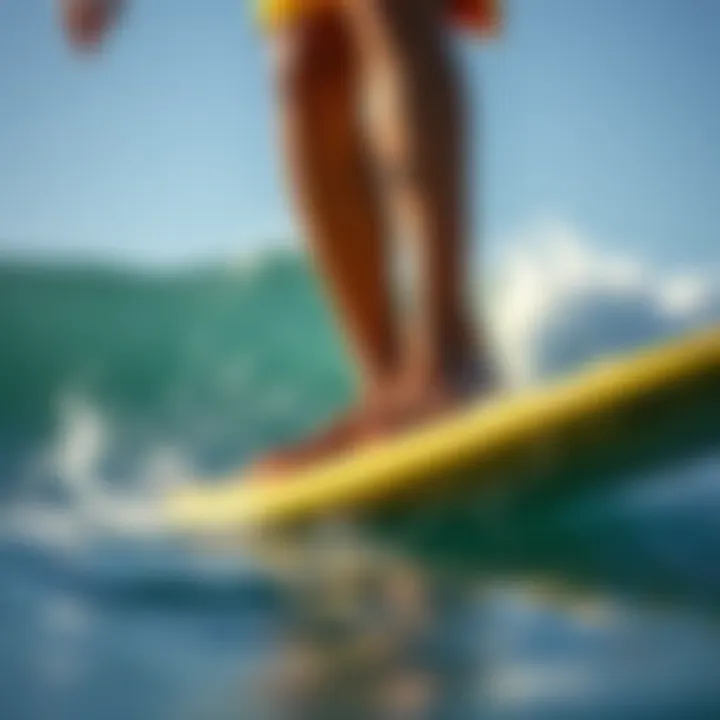
Foot placement is crucial when executing the hang ten. Toes should hang over the edge of the board, creating that iconic look of ten toes over the nose. However, the placement must not compromise control. If the toes extend too far, it can lead to loss of balance. Likewise, proper placement enhances the surfer's ability to steer through the wave.
- Heel vs. Toe Pressure: Finding the right amount of pressure on the toes or heels allows the surfer to pivot and steer. For example, tilting weight onto toes can make sharp turns while keeping the board stable.
- Flexibility and Grip: Surfers often recommend wearing a pair of surf booties for better grip. This supports the ability to maintain essential foot control, especially when riding choppy waves.
Wave Selection and Conditions
Choosing the right wave is as important as mastering technical skills. Not every wave is suitable for a hang ten. Ideally, surfers should look for a wave that has a consistent face and allows enough time to maneuver into position. Conditions such as wind direction, swell size, and tidal influence play a role in wave quality.
- Swell Size: Beginners should start with smaller waves until they feel comfortable. Intermediate and advanced surfers can tackle larger swells.
- Surf Report: Checking the surf report provides insight into the day’s conditions, helping surfers make informed decisions about when to enter the water.
The Evolution of Hang Ten Technique
The hang ten maneuver represents a unique bridge between tradition and innovation in surfing. This section seeks to unravel the intricate evolution of the technique, highlighting how historical shifts in surfing practices, alongside technological advancements, have breathed fresh life into an age-old art form. Recognizing these changes enriches our appreciation of why hang ten endures as both a style and a skill, connecting generations of surfers, all while enticing newcomers to embrace its challenge.
From Classic to Modern
In its inception, the hang ten technique was fundamentally rooted in classic longboarding. Pioneers like Bob Simmons and George Greenough shaped the early style, focusing on performance combined with graceful artistry. This method entailed placing all ten toes over the nose of the board, executed typically on mellow waves. It signified a sense of freedom and a connection with nature that rebounded into the culture of the time.
Fast forward to today, and hang ten has taken on modern interpretations, influenced by shorter and more maneuverable surfboards. Surfers now combine traditional foot positioning with contemporary styles, pushing the limits of what’s possible. The evolution can be observed in the seamless integration of tricks, and even the way surfers interact with varying wave conditions. While the essence of hang ten remains, each era brings its flavors.
- Classic Hang Ten:
- Modern Hang Ten:
- Utilizes longboards with wider noses.
- Emphasis on smooth, flowing movements.
- Style reflects the laid-back ethos of early surf culture.
- Adapts with performance shortboards.
- Incorporates tricks and aerial maneuvers.
- Influences from competitive surfing and events, such as the World Surf League.
This ongoing evolution invites both introspection and exploration, as it not only pays homage to the technique's roots but also challenges surfers to adapt continuously. The nature of hang ten is dynamic; to master it is to acknowledge its past while pushing toward its future.
Influence of Surfboard Design
The relationship between surfboard design and the hang ten technique is a compelling tale of innovation. Back in the day, surfers relied on heavier, cumbersome boards fashioned primarily from wood. These boards, while functional, dictated a fluid style of surfing that valued graceful movement over sheer speed.
As technology advanced, the introduction of lighter materials such as fiberglass and polyurethane revolutionized surfboard design. The modern boards are more agile, enabling surfers to execute the hang ten with greater finesse. Today's boards can often come with different shapes and sizes, which directly affect the ability to carry out the maneuver.
- Key advancements in surfboard design that shaped the hang ten include:
- Material Innovation: The move to lighter materials improved maneuverability.
- Nose Design: Wider noses cater specifically to hang ten, allowing optimal toe placement.
- Tail Shape: Different tail shapes help in navigating waves better while attempting the maneuver.
As surfing continues to grow, so does the symbiosis between hang ten and surfboard design. Understanding this connection not only gives insight into the technique itself but highlights how creativity drives evolution. Surfboards today are crafted with precise attention to detail, ensuring that every surfer can experience the thrill of mastering hang ten, making it an inclusive endeavor, regardless of skill level.
"To ride the ideal wave and execute the perfect hang ten is about more than skill; it’s an experience that ties a surfer to the sea." - Surf Culture Journal
Cultural Significance of Hang Ten
The hang ten maneuver holds a distinct place in the cultural fabric of surfing. Being more than just a technique, it embodies the spirit of a lifestyle that cherishes freedom, adventure, and connection with nature. Understanding its cultural significance is pivotal for grasping the broader implications on surf culture and the ways it has influenced communities and individual surfers alike.
Icon in Surf Culture
In the realm of surfing, hang ten is much more than a physical move; it's a symbol of artistry and skill. It showcases a blend of balance, agility, and an almost poetic connection to the ocean's rhythm. Surfers who can execute this technique often gain recognition not only for their skill but also for embodying the ideals of surf culture—daring, self-expression, and a deep respect for the water.
- Bravado and Style: Those who hang ten are often seen as paragons of style. The sheer visual spectacle—the image of a surfer riding a wave while dangling ten toes over the board—captures a moment of pure fluidity. It reflects an innate connection to the waves that is highly respected among peers.
- Tradition and Legacy: The technique harkens back to the roots of surfing, giving it historical weight. As surfing continues to evolve, the hang ten remains a nostalgic reminder of its beginnings—a link between the past and the various new styles that have emerged.
The technique also communicates a sense of achievement. Mastering hang ten is akin to earning one’s stripes in the surfing community. It’s a rite of passage, often celebrated in local surf competitions and gatherings, where surfers share stories of their most thrilling rides. This shared culture breeds camaraderie among surfers, fostering longstanding friendships and a supportive community.
Representation in Media and Art
Hang ten has not only inspired surfers but has also permeated media and art, reinforcing its cultural footprint.
- In Film and Television: Classic surf movies like "Endless Summer" immortalized the imagery of hanging ten, spreading the technique’s significance well beyond the beaches. These films often frame it as part of a larger narrative on adventure, youth, and exploration. They invoke the spirit of the surfers as they face and conquer natural elements, portraying hang ten as both a visual treat and a metaphor for freedom.
- Artistic Interpretations: Artists around the globe have drawn inspiration from this iconic move, producing pieces that capture the essence of surfing. From vibrant paintings to creative sculptures, the portrayal of the hang ten technique can be seen in galleries and public spaces, reinforcing its status as an emblem of surf culture. Such representations celebrate not only the beauty of the ocean but also the thrill that comes with riding its waves.
As surfers adopt new techniques and styles, the hang ten continues to inspire different forms of expression, intertwining itself with modern art and popular culture. This not only pays homage to the past but also invites new generations to explore these waves in their unique ways.
"Hang ten isn't just about the ride; it's about a way of life that resonates with many."
In essence, the culturally rich tapestry of the hang ten technique speaks volumes about the surfers’ commitment to their passions and the art form associated with it. Through its portrayal in various media and the lifestyle it promotes, hang ten retains its eternal appeal, drawing in enthusiasts from all walks of life, deeply entwining itself with the identity of surf culture.
Notable Surfers Known for Hang Ten
The practice of Hang Ten is not just a technique; it is a testament to the spirit of surfing. This section dives into the remarkable surfers who brought this maneuver into the limelight, shaping the way it’s perceived and executed today. Understanding these influential figures not only broadens our appreciation for Hang Ten but also showcases how personal style and innovation can intertwine within a well-loved sport
Pioneers and Innovators
The early days of surfing were ripe with experimentation, and among those leading the charge was the iconic Phil Edwards. Often hailed as one of the first to perfect Hang Ten, Edwards brought a unique flair and smoothness that set a new standard. He was not only a surfer but also a vision, influencing many young riders who later took to the waves. His ability to draw inspiration from the ocean and translate it into his style redefined how Hang Ten was viewed in the broader surfing culture.
Other significant pioneers include Joyce Hoffman and Buzzy Kerbox. Hoffman, a trailblazer for women in the sport, embodied the grace required to master Hang Ten, showing that the technique wasn't just a male-dominated art. Buzzy Kerbox, with his spirited approach, showcased how a vibrant personality could amplify the execution of the maneuver. Both of them left an indelible mark on the surfing community, inspiring countless others.
In a more historical context, the 1960s played a pivotal role in popularizing Hang Ten. The rise of surf films showcased these pioneers and brought their techniques straight to the masses, catalyzing a wave of interest in not just the sport but the culture surrounding it. This era birthed the idea that surfing was as much about style and expression as it was about performance. Through their mastery, these innovators paved the way for future generations to understand and embrace the beauty of this technique.
Contemporary Practitioners
In today’s surfing landscape, Hang Ten remains an essential skill, and several contemporary surfers have embraced and reshaped it with their unique styles. One notable figure is Mikey February, known for his fluid movements and seamless execution of Hang Ten. His ability to adapt this classic maneuver into modern contexts, while keeping the roots intact, emphasizes the evolution of surfing techniques. February’s style pays homage to the traditional surfers while pushing the boundaries of what can be done on a wave.
Another influential surfer is Kanoa Igarashi, whose adaptability and competitive spirit showcase how Hang Ten can be integrated into competition. Igarashi has gained recognition for blending traditional techniques with contemporary maneuvers, demonstrating that Hang Ten isn’t just a nostalgic nod to surfing heritage but remains an integral part of competitive surf culture today.
The growing community of surfers who practice Hang Ten continues to inspire and innovate, ensuring that this timeless technique retains its relevance. Whether it's through social media platforms or collaborations with brands, these surfers are keeping the spirit of Hang Ten alive while breathing fresh air into its execution.
"Hang Ten is more than just a move; it’s a bridge connecting the past to the present, allowing surfers to express their identity on the waves."
In summary, the evolution of Hang Ten through the lens of both pioneering figures and contemporary practitioners establishes it not merely as a technique but as a living art form, adapting yet remaining grounded in its rich history. Understanding these individuals helps deepen our respect for this art and the culture surrounding it.
Learning to Hang Ten: A Practical Guide
The hang ten is much more than a simple surfing maneuver; it’s an art form that combines both athleticism and balance. Learning to master this technique allows surfers not just to navigate waves but to truly connect with them. Embracing hang ten enhances one’s surfing repertoire, adding flair and skill that can impress peers and create lasting memories. Understanding this technique benefits surfers by helping them find their footing, literally and metaphorically, on the waves.
In this section, we’ll break down the steps necessary to successfully perform a hang ten, as well as the common hurdles one might face during the learning process—a truly beneficial guide for anyone keen on making this iconic maneuver a part of their surfing journey.
Step-by-Step Instructions
To grasp the hang ten technique thoroughly, it helps to follow a structured approach. Here are the practical steps to get you started:
- Choose the Right Surfboard:
Select a longboard with enough width and stability. Generally, a board measuring over nine feet works best. This helps in maintaining balance while you position your feet for the maneuver. - Get Comfortable on Your Board:
Before attempting hang ten, ensure you are comfortable paddling and riding the waves. Practice turning and maintaining balance to build confidence. - Position Yourself Correctly:
As you ride a wave, position yourself towards the tail of the board while keeping your weight centered. Your lead foot should be slightly forward, ready to shift as you get the hang of the technique. - Shift Your Weight:
To initiate hang ten, lean forward, shift your weight back, and pull your knees up to your chest. This allows you to free your feet for positioning on the board's nose. - Place Your Feet on the Nose:
Carefully walk your front foot to the very tip of the board. Your toes should hang over the edge, showcasing the defining characteristic of hang ten—your toes ten and over the board. - Balance with Your Arms:
Once in position, extend your arms for balance. Staying loose and adjusting as necessary will help maintain stability as you ride the wave. - Focus on the Wave:
Keep your eyes on the wave ahead. Building confidence comes from a strong connection with the surf; knowing its dynamics allows for better control of your body and board.
By following these steps diligently, gaining proficiency in hang ten becomes an achievable goal for many surfers.
Common Challenges and Solutions
While most surfers aspire to master the hang ten, a few hurdles often arise during the learning phase. Here are some common issues faced and ways to address them:
- Loss of Balance:
It’s easy to lose stability, especially if you're new to the maneuver.
Solution: Start on smaller waves; this can help you practice without the pressure of larger surf. - Fear of Falling:
This fear can be paralyzing for beginners. Solution: Remember that falling is part of learning. Embrace the wipeouts as they will ultimately make you a stronger surfer. - Foot Placement Issues:
Many struggle with proper foot placement or slipping off.
Solution: Regularly practice foot placement on flat ground before hitting the waves. Familiarize yourself with the distance between steps to avoid miscalculation. - Timing with the Wave:
Catching the wave at the right moment can be tricky.
Solution: Observe other surfers and study wave patterns. Understanding when to paddle and shift position is essential for a smooth hang ten.
By being aware of these common challenges and employing effective solutions, learners can navigate their hang ten journey with more success, ultimately enriching their surfing experience.
The Future of Hang Ten in Surfing
The hang ten technique embodies not only a critical maneuver in surfing but also serves as a touchstone for the evolution of surf culture. Looking ahead, the preservation and transformation of the hang ten are influenced by new surf technologies and the competitive sphere. This section will explore the significance of these elements as they pertain to the future of this iconic technique.
Adapting to New Surf Technologies
As surfing continues to progress at an astounding rate, technological innovations emerge that greatly impact how surfers approach traditional techniques such as hang ten. With advancements in board design and materials, surfers can now perform maneuvers with increased ease and precision. Examples of these technologies include:
- Lightweight Materials: Boards made from innovative materials such as carbon fiber or EPS foam provide a responsive feel while maintaining durability. This change allows surfers to maneuver better in critical moments, making it easier to execute complex moves, including hang ten.
- Foil Technology: Surfboards that utilize hydrofoil capabilities can enhance the experience. These boards allow surfers to glide above the surface of the water, fundamentally altering the wave-riding dynamics. In this altered context, mastering hang ten can take on an entirely different flavor, requiring surfers to adapt their skills to new challenges.
The integration of technology into the surfing experience encourages a reimagining of classics like hang ten. It not only improves performance but also invites a new generation of surfers to push boundaries that were once thought impossible.
Hang Ten in Competitive Surfing
In the realm of competitive surfing, the hang ten remains a powerful symbol of style and capability. As competitions become increasingly sophisticated, the maneuver finds its way into the limelight. Surfers today face the challenge of blending traditional style with contemporary flair. This melting pot of influences is observable in various surf competitions that feature:
- Diverse Criteria for Judging: Evaluations now encompass not just execution but also the creativity and athleticism of maneuvers. Successfully executing a hang ten during a high-stakes competition can be a game-changer, signaling a surfer's mastery of the technique.
- Evolution of Formats: Events such as the WSL (World Surf League) have introduced formats that embrace different surf conditions and styles, allowing hang ten to be judged in various contexts. This gives surfers an opportunity to showcase their skills, further solidifying the maneuver's place in modern surfing glyph.
Using hang ten in competitions opens the door to an even deeper appreciation for the maneuver among surfers and spectators alike. It connects the past with the future, ensuring that this distinctive technique maintains its significance while adapting to contemporary tastes and criteria.
As the tides of surf culture continue to shift, the hang ten technique is poised to be an enduring feature, inviting surfers to ride with a foot in both tradition and innovation.
Culmination and Reflections
In wrapping up our exploration of Hang Ten, we find a technique that goes beyond just a maneuver in surfing; it represents a way of life, a culture steeped in the spirit of the ocean and the thrill of the ride. Understanding this iconic move brings to light not only the mechanics but also the dedication and passion of surfers who strive for mastery. It’s about getting your feet out on the nose of the board, finding that sweet spot, and balancing perfectly on the crest of a wave. The appeal of Hang Ten continues to resonate through the surfing community, evolving but always rooted in tradition.
The Enduring Appeal of Hang Ten
The Hang Ten is like a timeless classic, like an old record that never loses its charm. This technique lures surfers with its allure of freedom, skill, and connection to nature. Performing a Hang Ten is a statement, encapsulating the essence of surfing where balance meets artistry. Surfers young and old often recount the thrill of the first time they managed to glide effortlessly, toes curled over the edge of the board, feeling the rush of salty air and the surge of the wave below. It serves as a rite of passage, marking both progression in skill and deeper immersion in surfing culture.
Moreover, as surfing continues to embrace new styles and technologies, including advancements in board designs and training techniques, the Hang Ten stands resilient, adapting while retaining its core essence. The move remains a symbol of surfing's heritage, inspiring new generations who admire the craft and strive to master it.
Invoking a Deeper Understanding
To truly appreciate Hang Ten, it's essential to look beyond the surface. This technique is a blend of physical skill and mental focus, demanding not just coordination and balance but also an understanding of wave physics. Mastering Hang Ten involves studying the ebb and flow of the ocean, reading conditions, and knowing what it feels like to ride a wave at its peak.
It encourages surfers to develop a connection with their environment more profound than the act of riding a wave. This connection fosters respect for the ocean and its moods, teaching patience and perseverance. It is vital for surfers to immerse themselves in local surf culture; to listen to stories from seasoned locals, grasp the unwritten rules of the waves, and humbly accept that even the best sometimes wipe out.